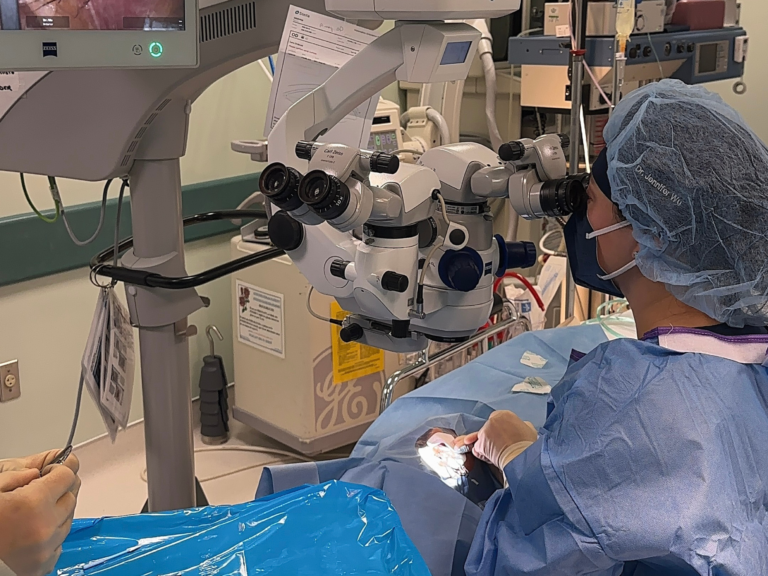
Laser eye surgery is a life-changing eye procedure that offers clear vision and more freedom from glasses or contacts. While risks exist for any elective procedure, even a widely used one like LASIK, choosing a highly skilled eye surgeon and undergoing a thorough screening exam significantly reduces the chance of serious issues.
What is LASIK?
LASIK (Laser-Assisted In Situ Keratomileusis) is a widely performed vision correction procedure that reshapes your cornea to improve refractive errors including nearsightedness, farsightedness, and astigmatism. By using advanced laser technology, LASIK can significantly reduce or possibly put an end to the need for glasses and contact lenses.
What eye conditions does LASIK treat?
LASIK is primarily used to treat common refractive errors, including:
- Myopia (Nearsightedness): When the cornea is too steeply angled or the eye is too long, causing distant objects to appear blurry.
- Hyperopia (Farsightedness): When the cornea is too flat, or the eye is too short, making close objects appear blurry.
- Astigmatism: An irregular corneal shape that leads to distorted or blurry vision at all distances.
What are the risks of LASIK? Understanding Potential Complications
LASIK is considered a highly safe and effective procedure, but as with any form of surgery, it carries some risks. Choosing a highly qualified surgeon and the appropriate procedure for your eye health significantly lowers these risks. Potential complications include:
Dry Eyes: LASIK can temporarily or permanently reduce tear production, causing discomfort and blurry vision.
Flap Complications: The corneal flap that is created during LASIK can sometimes be dislodged or heal improperly, affecting vision.
Halos and Glare: Some individuals experience night vision disturbances, including halos around lights or increased glare.
Undercorrections or Overcorrections: In some cases, LASIK may not fully correct vision, requiring an enhancement procedure.
Infection or Inflammation: While rare, post-surgical infections or excessive inflammation can affect healing and vision.
Regression: Some people experience a gradual return of their original refractive error over time.
Ectasia: In rare cases, LASIK can weaken the cornea, leading to a condition called keratectasia, which may require further treatment.
While these complications are uncommon, selecting an experienced eye surgeon and undergoing a comprehensive evaluation helps minimize risk.
Schedule Consultation
We’d love to help you get all the information you need in order to make the best choice for your eyes. Schedule consultation today! Our staff is available and happy to answer your every question.
Am I a good candidate for LASIK?
Not everyone is a good candidate for LASIK. A thorough evaluation by an experienced eye surgeon will determine if the procedure is right for you. Ideal candidates generally:
- Are over 18 years old with stable vision for at least a year
- Have sufficient corneal thickness for reshaping
- Do not have severe dry eyes or corneal diseases
- Are not pregnant or nursing
- Have realistic expectations about the results
For those who may not qualify for LASIK, alternatives such as SMILE or EVO ICL may be better options. These procedures offer vision correction with different techniques and may be preferable for individuals with dry eyes, thin corneas or higher prescriptions.
Take the Next Step
Want to know more about the risks and benefits of LASIK? Please fill out the form on this page or call 949.208.9090 to schedule your appointment.
We proudly serve the Costa Mesa & Newport Beach areas.