
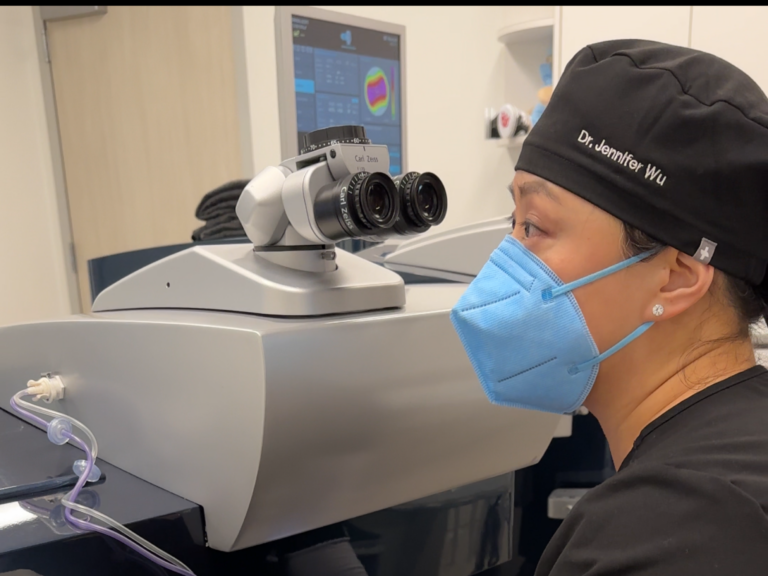
Dr. Jennifer Wu brings cutting-edge precision and advanced technology to vision correction at One EyeCare LASIK. As a cornea specialist with over 10 years of experience treating complex cases, Dr. Wu invests in the latest advancements to deliver exceptional results for every patient. Your eyes deserve more than outdated equipment, they deserve technology that gives you the clearest, most comfortable vision possible. From the newest laser platforms to innovative lens implants, we offer options that many practices in Orange County simply don’t have access to yet.
Advanced Technology

Understanding Advanced Technology
Technology in vision correction has evolved dramatically, much like smartphones have changed over the years. The problem is that many practices continue using older equipment because upgrading requires significant investment. When you choose a practice with advanced tools, you’re choosing better precision, faster recovery times, and access to procedures that weren’t possible even a few years ago.
The right technology makes a real difference in your outcome. Advanced platforms allow for customized treatments tailored to your unique eye anatomy, not just a one-size-fits-all approach. This means sharper vision, reduced side effects like glare and halos, and the ability to help patients who previously weren’t candidates for vision correction. If you’ve been told “no” elsewhere, it might be because that practice simply doesn’t have the tools to safely help you.
Advanced Technology Options We Offer
We continuously invest in the latest innovations so we can offer more options to more people. Each technology serves a specific purpose, and during your consultation, Dr. Wu will recommend the best fit for your unique eyes and lifestyle goals.
SMILE Pro
SMILE Pro represents the next generation of laser vision correction, using the VisuMax 800 platform for incredibly fast and precise treatment. The entire laser portion takes just seconds, making it the quickest vision correction procedure available today. This flapless technique creates minimal disruption to your cornea, which means reduced dry eye risk and greater structural stability, perfect if you’re active in contact sports or martial arts.
The Laser Step Takes About 8 to 10 Seconds
The American Academy of Ophthalmology’s EyeWiki says SMILE Pro runs on the VisuMax 800 platform, which is faster than the original version. It reports the laser time at about 8 to 10 seconds, shorter than other current platforms. That fits the quick laser step described above, and Dr. Wu programs the laser around your own measurements.
“Laser time is approximately 8-10 seconds, which is faster than the other current platforms”
American Academy of Ophthalmology, EyeWiki, “Keratorefractive Lenticule Extraction (KLEx) Surgeries”
Contoura LASIK
Contoura LASIK uses topography-guided technology that maps over 22,000 unique elevation points on your cornea’s surface. Think of it as creating a personalized fingerprint of your eye, then using that information to guide the laser with extraordinary precision. This customized approach can correct subtle irregularities you didn’t even know existed, resulting in vision that’s often sharper than what you had with glasses or contacts.
Custom Mapping Led to Fewer Focusing Errors
In a study of 43 patients, each person had topography-guided treatment in one eye, using Contoura Vision software, and a different LASIK method in the other eye. Both methods worked safely and effectively. The topography-guided eyes had fewer higher-order aberrations (HOAs), which are small focusing errors in the eye. That fits the custom mapping described above.
“Topography-guided LASIK induced fewer HOAs”
Kim J, et al., Journal of Cataract and Refractive Surgery, 2019
Ultra-Thin Flap LASIK
Ultra-thin flap LASIK creates a corneal flap that’s significantly thinner than traditional LASIK, preserving more of your natural corneal tissue. This technique is particularly valuable for patients with thinner corneas who might have been turned away elsewhere. The thinner flap also promotes faster healing and maintains better corneal biomechanical strength, giving you both safety and excellent visual outcomes.
Thinner Flaps Put Less Strain on the Cornea
An American Academy of Ophthalmology summary of a lab study on donated human corneas tested flaps cut at two depths. It found thin flaps produce less strain on the cornea than thick flaps. The summary also notes recovery after a thin flap is equivalent to conventional LASIK. Dr. Wu measures your corneas to decide whether this approach fits you.
“Thin flaps produce less strain than thick flaps”
American Academy of Ophthalmology, Editors’ Choice, August 2012
Laser-Assisted Cataract Surgery
Laser-assisted cataract surgery replaces manual surgical steps with computer-guided laser precision for your lens replacement procedure. The laser creates perfectly sized incisions and precisely fragments the cataract, allowing for gentler removal with less ultrasound energy. This advanced approach leads to faster recovery, reduced inflammation, and more predictable outcomes, which is especially important when you’re investing in premium lens implants.
Laser Assistance Uses Less Ultrasound Energy
A meta-analysis of 73 studies compared this method, called FLACS in the research, with standard cataract surgery. It found the laser approach used less ultrasound energy and was more precise. Vision at six months was about the same with both methods, and both were safe and effective. Dr. Wu will explain which approach fits your eyes and your lens choice.
“FLACS required less ultrasound energy and a more precise treatment”
Kolb CM, et al., Journal of Cataract and Refractive Surgery, 2020
LAL IOL Implant
The Light Adjustable Lens (LAL) is revolutionary because it’s the only IOL that can be fine-tuned after implantation. Using special UV light treatments performed in the office, Dr. Wu can adjust your lens prescription based on how your eye actually heals, not just predictions made before surgery. This means you get to “test drive” your vision and make adjustments until it’s exactly right. No other lens technology offers this level of customization.
The First Lens That Can Be Adjusted After Surgery
The U.S. Food and Drug Administration approved this lens system in 2017 as the first that can make small power changes after cataract surgery. The changes come from UV light treatments in the office, usually three or four over one to two weeks, and you wear UV-protective glasses until they are done. The FDA says the system is meant for certain patients and not for people taking some medicines. Dr. Wu begins with comprehensive diagnostic scans to find the best fit for you.
“First medical device system that can make small adjustments to the artificial lens’ power”
U.S. Food and Drug Administration, news release, November 22, 2017
Risks of Delaying Vision Correction
Putting off vision correction keeps you relying on glasses or contacts, and that reliance has costs. Waiting can affect your budget, your day-to-day comfort, and how easily you stay active. Here is how it adds up, and how One EyeCare LASIK accounts for each concern.
The Financial Risk of Paying for Glasses Over Time
Glasses, contact lenses, and lens supplies keep adding to your costs for as long as you rely on them. Some people wait because they worry newer technology costs more. One EyeCare LASIK offers CareCredit and Alphaeon financing with low monthly payments, no-interest options, and flexible payment plans, and the team is upfront about costs. If your employer offers a Flexible Spending Account (FSA), you may be able to use it for vision correction costs.
The Health Risk of Putting Up With Blurry Vision
Blurry vision and the hassle of glasses or contacts can wear on you day to day, and waiting does not change what your eyes need. Some people put it off because they are unsure about newer technology. Dr. Wu starts with comprehensive diagnostic scans, and during your consultation she recommends the option that fits your eyes and goals. She also reviews your healing personally and texts you the evening of your procedure.
The Safety Risk of Glasses Getting in the Way
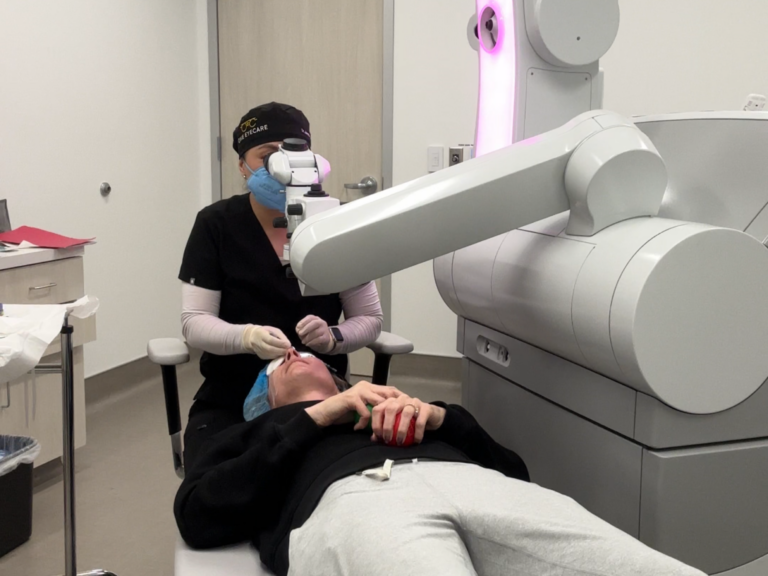
Relying on glasses or contacts can get in the way of sports, martial arts, and other active days. Some people worry a procedure will not be precise enough. During treatment, eye-tracking technology monitors your eye position thousands of times per second and adjusts the laser delivery, and Dr. Wu plans each step from your own scans. She sees you personally at your first follow-up visit so any adjustments can be made quickly if needed.

What Sets Us Apart
Dr. Jennifer Wu is the first female surgeon in California to perform SMILE Pro laser eye surgery, demonstrating her commitment to bringing the latest innovations to her patients as soon as they become available. As a cornea specialist who has completed over 500 cornea transplants and successfully treated complex cases for more than a decade, she has the expertise to use advanced technology safely and effectively. At One EyeCare LASIK, you’re not just getting the newest equipment. You’re also getting a surgeon who knows exactly how to optimize it for your unique situation.
We offer all five types of vision correction procedures, which means Dr. Wu can choose the best approach for your eyes without being limited by the equipment the practice has available. Recent studies show that female surgeons achieve better outcomes than male surgeons, and Dr. Wu’s meticulous approach to procedure planning and low enhancement rate reflect her commitment to these standards. You deserve effective treatment guided by a surgeon who’s dedicated to achieving exceptional results.

Get Started With Our Advanced Technology Today
Your vision deserves more than outdated equipment and rushed consultations. Dr. Jennifer Wu, MD, combines cutting-edge technology with over 10 years of experience as a cornea specialist to deliver the exceptional results you want. Whether you’ve been told “no” elsewhere or you’re exploring vision correction for the first time, our advanced platforms open up possibilities that simply didn’t exist before.
Ready to experience the difference our advanced equipment can make Contact One EyeCare LASIK at 949.208.9090 to schedule your consultation. Visit us at 3033 Bristol Street, Suite 123 in Costa Mesa, or connect with us on Facebook, Instagram, and YouTube to see our procedures in action. Your clearer vision is just one consultation away.
FAQs
What's the difference between regular SMILE and SMILE Pro?
SMILE Pro uses the VisuMax 800 platform, which is significantly faster than the original SMILE procedure performed on the VisuMax 500. The laser portion of SMILE Pro takes just seconds compared to the longer treatment time of regular SMILE. This speed improvement means less time holding still during the procedure and an even more comfortable experience overall.
What is Contoura LASIK?
Contoura LASIK is a topography-guided laser vision correction that maps over 22,000 elevation points on your cornea to create a detailed, personalized treatment plan. Unlike traditional LASIK that only corrects your prescription, Contoura addresses subtle irregularities in your corneal surface that affect visual quality. This advanced mapping technology allows for highly customized correction that can result in vision sharper than you had with glasses or contacts.
Is Contoura LASIK worth it?
Contoura LASIK is worth considering if you want the sharpest possible vision and the most customized treatment available. Many patients achieve better than 20/20 vision and experience improved night vision with reduced glare and halos compared to traditional LASIK. The added precision is particularly valuable if you have irregular astigmatism or want the best possible visual outcome for activities like night driving or sports.
Is laser-assisted cataract surgery better than traditional?
Laser-assisted cataract surgery offers greater precision and consistency compared to traditional manual techniques, resulting in more predictable outcomes and faster recovery. The laser creates perfectly sized incisions and gently breaks up the cataract with less ultrasound energy, reducing inflammation and trauma to surrounding eye structures. While both approaches are safe and effective, laser assistance is particularly beneficial when you’re investing in premium lens implants that require exact positioning for optimal vision.
How long does Light Adjustable Lens last?
The Light Adjustable Lens is designed to last a lifetime, just like any other premium intraocular lens implant. Once Dr. Wu completes your customization sessions and performs the final “lock-in” treatment, the lens becomes permanently set in your chosen prescription. The LAL is made from the same durable materials as other IOLs and doesn’t degrade or lose its adjustability features over time, you simply keep the optimized vision you selected during the adjustment phase.