

If you’ve been told “no” to LASIK or you’re dealing with thin corneas, astigmatism, or dry eyes, PRK might be your answer. Dr. Jennifer Wu, MD specializes in helping patients who thought vision correction wasn’t possible for them. At One EyeCare LASIK, we offer PRK as one of five vision correction procedures, giving you real options when other practices have turned you away. PRK has been around longer than LASIK and works beautifully for eyes that need a gentler approach.
PRK
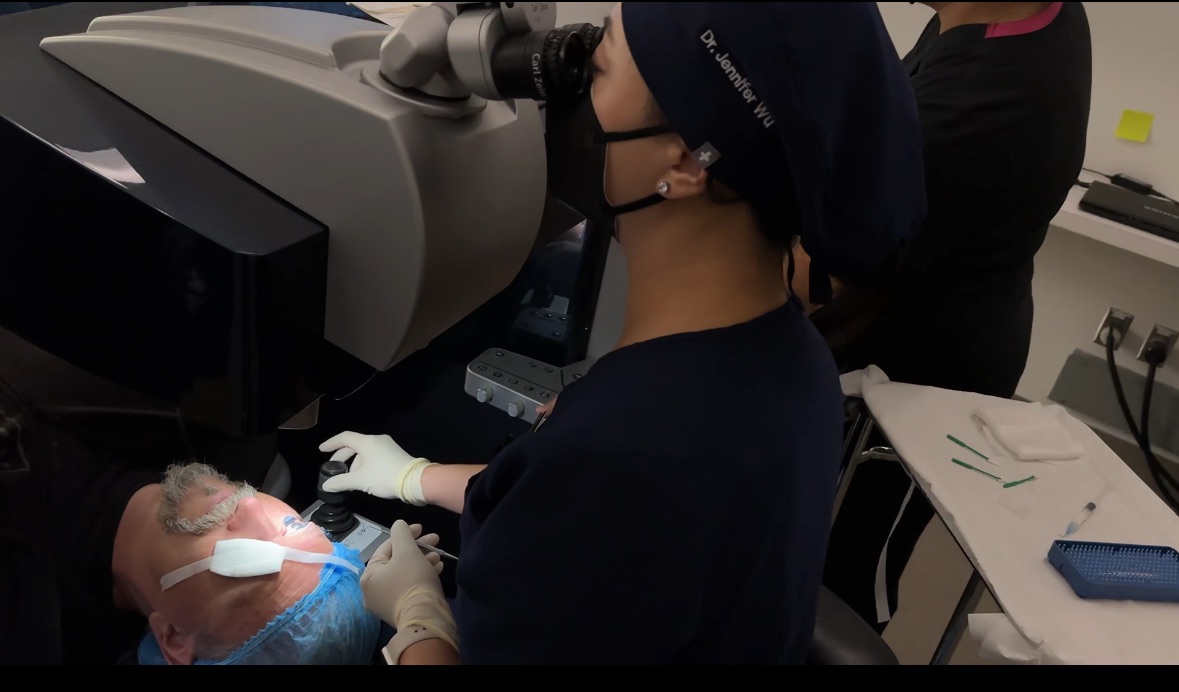

Understanding PRK
PRK is the original laser vision correction procedure that LASIK was based on. Instead of creating a corneal flap like LASIK does, PRK gently removes the thin outer layer of your cornea and reshapes the surface with a laser. Your cornea naturally regenerates this outer layer in a few days. This makes PRK perfect for people with thin corneas, those who play contact sports, or anyone whose eyes just aren’t quite right for LASIK. The results are just as good as LASIK—you just need a few extra days for recovery.
Think of PRK as LASIK’s reliable older sibling. It’s been perfecting vision for decades and is actually safer for certain eye conditions. If you have moderate to high astigmatism, thin corneas, or you’re active in sports where eye trauma is possible, PRK might actually give you better long-term results than LASIK. No flap means no flap complications, and for many patients, that peace of mind is worth the slightly longer recovery time.
Benefits of PRK
No Corneal Flap Means No Flap-Related Complications
One of the biggest advantages of PRK is that there’s no flap to worry about. With LASIK, a flap is created and remains for life, which means there’s always a tiny risk of flap displacement if you get hit in the eye. PRK eliminates this concern completely because no flap is ever created. This makes it perfect for active people, athletes, or anyone who works in environments where eye trauma is possible. You get excellent vision correction without that “what if” worry in the back of your mind.
Perfect Solution for Thin Corneas
If you’ve been told your corneas are too thin for LASIK, PRK is often your best option. Because PRK doesn’t require creating a flap (which uses up corneal tissue), it preserves more of your natural cornea. This makes the procedure safer for people with naturally thin corneas or those with conditions like keratoconus. You’re not excluded from clear vision just because your corneas are thinner—you just need the right procedure, and that’s where PRK shines.
Reduced Risk of Dry Eye
PRK typically causes less dry eye than LASIK because it doesn’t cut as deeply into the cornea. The nerves that help your eye produce tears are better preserved with PRK’s surface approach. If you already struggle with dry eyes or you’re worried about making them worse, PRK is often the gentler choice. Yes, you’ll have some temporary dryness during healing, but long-term dry eye issues are generally less common with PRK than with LASIK.
Ideal for High Prescriptions and Astigmatism
PRK works exceptionally well for correcting higher levels of nearsightedness and astigmatism. The surface ablation technique allows for more precise reshaping of irregular corneas. If your prescription has kept you dependent on thick glasses or uncomfortable contacts, PRK can give you the freedom you’ve been wanting. Custom topography-guided PRK can even address irregular astigmatism that glasses and regular contacts can’t fully correct.
Same Excellent Vision Outcomes as LASIK
Here’s the best part: PRK delivers the same fantastic vision results as LASIK. You’ll wake up and just see—no plastic stuck to your eye or glass panes to peer through. The recovery takes a bit longer (about a week instead of a day or two), but once you’re healed, your vision is just as crisp and clear. Most PRK patients achieve 20/20 vision or better. The path to get there is just slightly different, but the destination is the same: freedom from glasses and contacts.

What to Expect During the Treatment Process
Why Choose Our Approach to PRK
Dr. Jennifer Wu is a cornea specialist—not just a general ophthalmologist—which means the cornea (the exact part of your eye treated with PRK) is her expertise. She’s been successfully treating complex cases for over 10 years, including patients who’ve been turned away elsewhere. As the first female surgeon in California to perform SMILE Pro and the first surgeon in California to perform FDA-approved corneal crosslinking, she stays on the cutting edge of technology and techniques. She’s also had vision correction herself and has performed it on most of her family and the other doctors in her practice—that’s how confident she is in what she does.
At One EyeCare LASIK, you get boutique, personalized care that feels nothing like the vision correction “mills” you might have visited before. There’s no waiting room because we don’t make you wait. You’ll spend quality time with Dr. Wu at every step, not just rushed through a process. You deserve to feel heard, seen, and appreciated—and that’s exactly how patients describe their experience here.
Find Out If Your Eyes Are Right for PRK!
PRK works beautifully for eyes that other practices have turned away. And, the recovery is easier than you think! Curious what a cornea specialist who’s had vision correction herself has to say about PRK? Dr. Wu shares straight-talk eye care tips, patient stories, and behind-the-scenes looks at procedures on Instagram, Facebook, and YouTube
Ready to find out if PRK is your ticket to clear vision? Call 949.208.9090 to schedule your one-hour consultation with Dr. Jennifer Wu, MD at One EyeCare LASIK. We’re at 3033 Bristol St., Suite 123 in Costa Mesa, and we actually don’t have a waiting room because we don’t make you wait.

FAQs
What is PRK eye surgery?
PRK is a laser vision correction procedure that reshapes your cornea to fix nearsightedness, farsightedness, and astigmatism without creating a corneal flap. The thin outer layer of your cornea is gently removed, then a laser precisely reshapes the surface to correct your vision. This outer layer naturally regenerates within a few days, and your vision continues to improve over the following weeks.
How long does PRK last?
PRK results are permanent for the prescription you had at the time of the procedure. Your eyes won’t “go back” to needing the same glasses or contacts you had before. However, if you’re over 40, you’ll still eventually need readers due to presbyopia (that’s just normal aging, not the procedure failing). Some people experience very minor prescription changes years later due to natural eye changes, but the vast majority enjoy clear vision for decades.
Is PRK safer than LASIK?
PRK is often considered safer for certain patients, especially those with thin corneas, dry eyes, or high-risk occupations and hobbies. Because there’s no flap created, there’s no risk of flap complications—ever. Both procedures have excellent safety records, but PRK eliminates flap-related risks entirely, making it the better choice for people who play contact sports or work in jobs where eye trauma is possible.
Can you get PRK twice?
Yes, enhancement procedures are possible if needed, though Dr. Wu’s meticulous planning and low enhancement rate means most patients get excellent results the first time. If your eyes over-heal or under-heal (mother nature throwing a curve ball), a touch-up can be performed once your eyes have fully stabilized. Your corneal thickness will be re-evaluated to ensure there’s enough tissue for a safe enhancement.
How long after PRK can I drive?
Most patients can drive within about a week after PRK, once their vision has stabilized enough to meet legal driving requirements. Everyone heals at a slightly different pace, so Dr. Wu will clear you to drive at your follow-up appointment when she confirms your vision is safe for the road. Some people feel comfortable driving sooner, while others need a few extra days—listen to your eyes and follow Dr. Wu’s guidance.