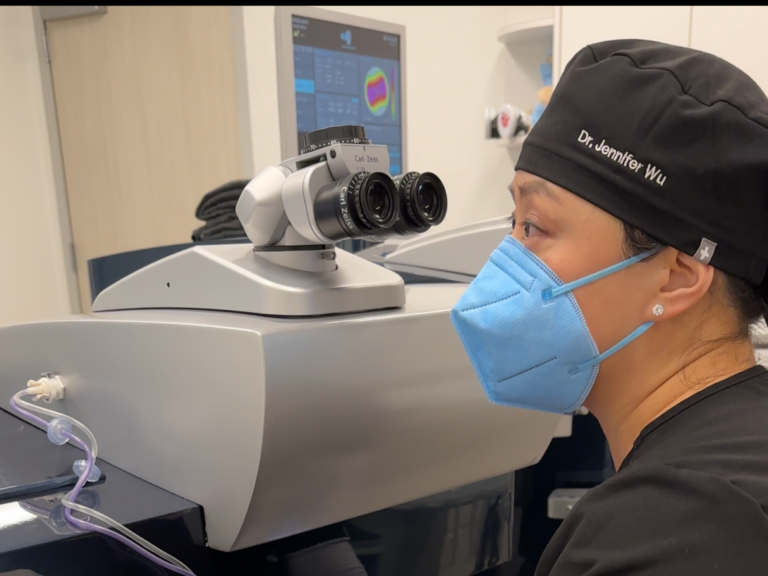
Laser eye surgery has transformed the way millions achieve clear vision without the need for glasses or contact lenses. Two of the most common procedures, PRK (photorefractive keratectomy) and LASIK (laser-assisted in situ keratomileusis) offer effective vision correction, but they have key differences. Your eye surgeon will consider several factors to determine the best option for your needs.
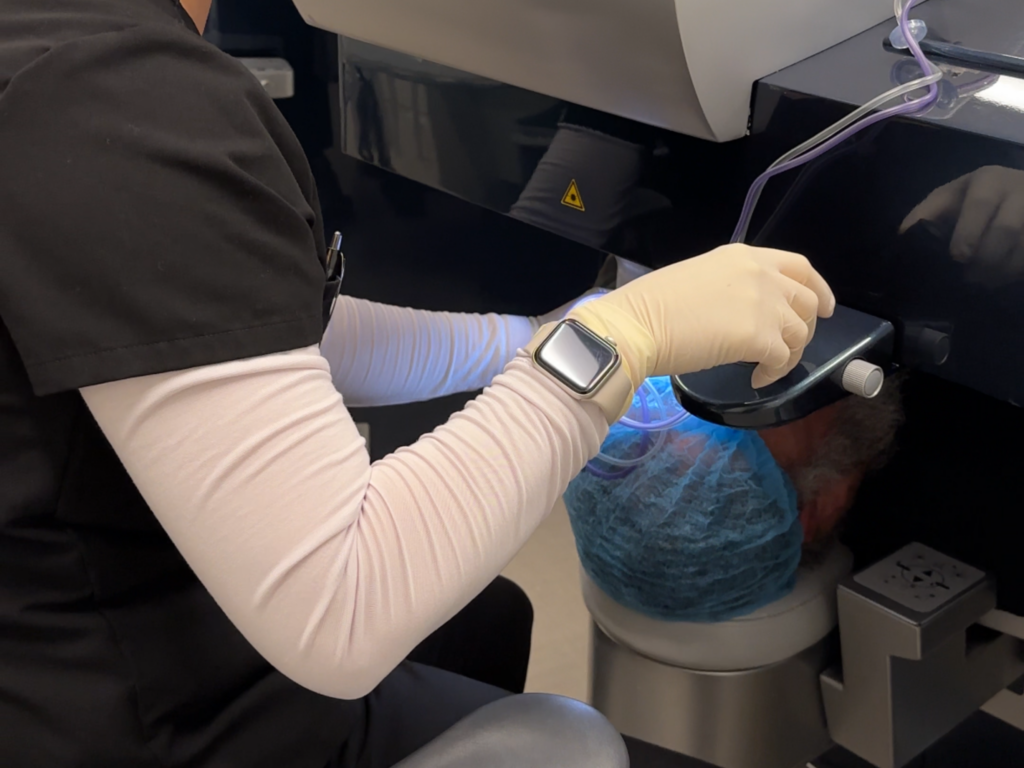
How does laser eye surgery work?
Both PRK and LASIK use a laser to reshape the cornea, improving how light enters the eye and focuses on the retina. This correction can significantly reduce or eliminate nearsightedness, farsightedness, and astigmatism.
LASIK involves creating a thin flap in the cornea, lifting it, and using a laser to reshape the underlying tissue before repositioning the flap. This flap acts as a natural bandage, allowing for a shorter recovery time.
PRK removes the outermost layer of the cornea (epithelium) before reshaping the underlying corneal tissue with a laser. The epithelium then heals over the 3-5 days, which results in a longer healing process.
Both procedures achieve excellent vision correction, but the techniques impact recovery time and suitability for different patients.
PRK vs. LASIK: which laser eye surgery is right for you?
Your eye surgeon will evaluate multiple factors to determine whether PRK or LASIK is the best choice for you:
Corneal Thickness: If you have thin corneas, LASIK may not be an option since it requires a certain thickness to create the corneal flap. PRK does not require a flap, making it the preferred choice for individuals with thinner corneas.
Lifestyle and Activity Level: If you participate in high-impact sports or activities where eye injuries are possible, PRK may be a better option. Since LASIK involves a corneal flap, there is a small risk of flap displacement due to trauma.
Schedule Consultation
We’d love to help you get all the information you need in order to make the best choice for your eyes. Schedule consultation today! Our staff is available and happy to answer your every question.
Pre-existing Dry Eye Syndrome: LASIK can increase dry eye symptoms because it disrupts some corneal nerves. PRK, while still affecting tear production, might be a better option for those already struggling with dry eyes.
Healing Preferences: LASIK has a quicker recovery time with minimal discomfort, while PRK involves a longer healing process with more discomfort in the initial days. However, PRK may provide equally excellent long-term results without the potential complications of a corneal flap.
A comprehensive eye exam will help your surgeon determine the most suitable procedure based on your eye health and vision goals.
What is recovery time like after LASIK or PRK?
Recovery differs significantly between the two procedures:
LASIK Recovery: Most patients experience clearer vision within a day or two and resume normal activities quickly. Discomfort is usually mild, and vision stabilizes within a few weeks.
PRK Recovery: Since the epithelium must regrow, initial healing takes about a week. Patients typically experience moderate discomfort for the first few days, and vision may fluctuate over several weeks to months before stabilizing.
Your surgeon will provide detailed post-operative care instructions to ensure a smooth recovery and optimal results.
How long does laser eye surgery last?
Both LASIK and PRK offer long-lasting vision correction. Most patients enjoy clear vision for many years, with only minor changes due to natural aging (such as presbyopia) that may eventually require reading glasses. While rare, some individuals may experience some vision regression over time. If necessary, an enhancement procedure can help maintain sharp vision.
Want to know more about LASIK and PRK laser eye surgery? Please fill out the form on this page or call 949.208.9090 to schedule your appointment.
We proudly serve the Costa Mesa & Newport Beach areas.