
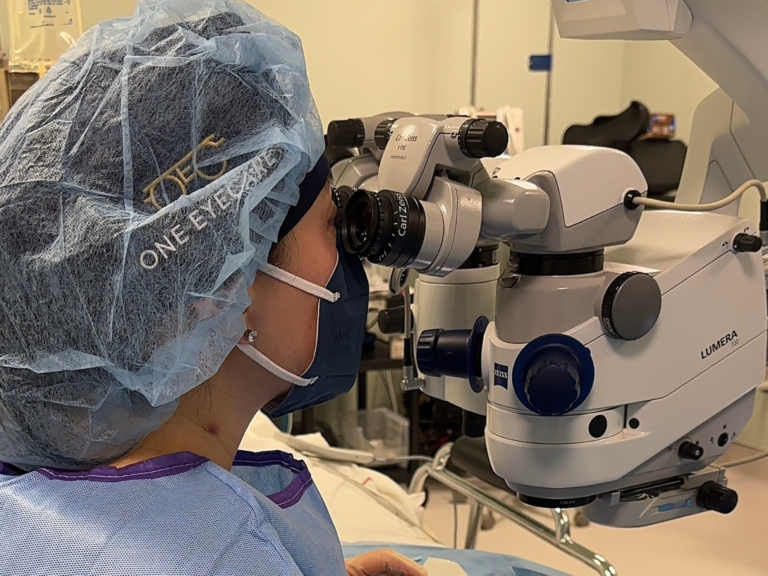
Laser eye surgery is an evolving field, and PRK (photorefractive keratectomy) led the way as the original LASIK. While LASIK has become more popular, PRK remains a viable option, especially for those who may not qualify for LASIK. Thanks to advancements in technology, PRK continues to evolve, offering improved outcomes, shorter recovery times, and enhanced precision.
What is PRK?
PRK is a type of vision correction procedure performed to fix refractive errors such as nearsightedness, farsightedness, and astigmatism. Unlike LASIK, which forms a corneal flap, PRK removes the thin outer layer of the cornea (epithelium) before shaping the underlying corneal tissue with an excimer laser. Over a few days time, the epithelium regenerates, resulting in clearer vision.
How does PRK work?
The PRK procedure begins with numbing eye drops to ensure comfort. The surgeon then removes the epithelial layer using an alcohol solution, brush, or laser. An excimer laser reshapes the cornea, correcting vision by adjusting how light enters the eye. A bandage contact lens is applied to protect the eye to help the epithelium heal. The procedure will typically take 5 to 10 minutes per eye, and patients can return home the same day.
The Future of PRK: How Advanced Technology Is Improving Vision Correction
While PRK has been around for decades, technological advancements continue to enhance its effectiveness and appeal. Some of the latest innovations include:
Faster Healing and Reduced Discomfort
Modern techniques, such as transepithelial PRK (also called “no-touch PRK”), use an excimer laser to remove the epithelium instead of alcohol or a mechanical tool. This method minimizes discomfort and speeds up healing.
Topography-Guided (Contoura) PRK
Imaging technology maps the eye’s unique imperfections, allowing the laser to correct even the very minor irregularities and customize your results. This results in sharper, higher-quality vision and reduces the likelihood of glare and halos at night.
Improved Medications and Post-Operative Care
New anti-inflammatory and pain-relief medications, along with advanced bandage contact lenses, have made PRK recovery more comfortable. Enhanced steroid regimens also help reduce the risk of corneal haze, a potential side effect of PRK.
Schedule Consultation
We’d love to help you get all the information you need in order to make the best choice for your eyes. Schedule consultation today! Our staff is available and happy to answer your every question.
What is recovery like after PRK?
Recovery from PRK takes longer than LASIK because the epithelial layer needs time to regenerate. Most patients experience blurry vision and discomfort for the first few days, with significant improvement in about a week. Complete healing and vision stabilization can take several weeks to a few months. Patients typically take a few days off work and need to follow a regimen of medicated eye drops to enhance healing and prevent infection.
Am I a good candidate for PRK?
PRK remains a great option for many people, especially those who may not be ideal candidates for LASIK. You may be a good candidate if you:
- Have thin corneas, making LASIK unsuitable
- Have dry eyes, as PRK may be less likely to worsen symptoms
- Participate in contact sports or jobs with a high risk of eye trauma
- Have a stable vision prescription
- Are in good overall eye health with no major conditions such as keratoconus
PRK continues to evolve with advancements in technology, making it a safe and effective option for vision correction. If you are considering PRK, consult Dr. Wu to determine if it is the right choice for you.
Take the Next Step Toward Laser Eye Surgery
Want to know more about PRK laser eye surgery? Please fill out the form on this page or call 949.208.9090 to schedule your appointment.
We proudly serve the Costa Mesa & Newport Beach areas.