
EVO ICL for Fountain Valley patients starts with a question most LASIK consultations never reach: how much corneal tissue do you have to spare? We built One EyeCare LASIK around it. Dr. Jennifer Wu, an ophthalmologist and cornea specialist, sees patients who were told their prescription is too strong for a laser. Others arrive with corneas that measured too thin, or with eyes that can no longer stand a full day in contact lenses. We offer five vision correction procedures at our Costa Mesa office on Bristol Street, so the recommendation follows your eyes. You’ll spend a full hour with Dr. Wu before anyone brings up a surgery date. She examines your eyes herself and tells you plainly when a lens implant fits and when it doesn’t. A visit like that depends on who is sitting across from you.
EVO ICL Fountain Valley

Meet Dr. Wu
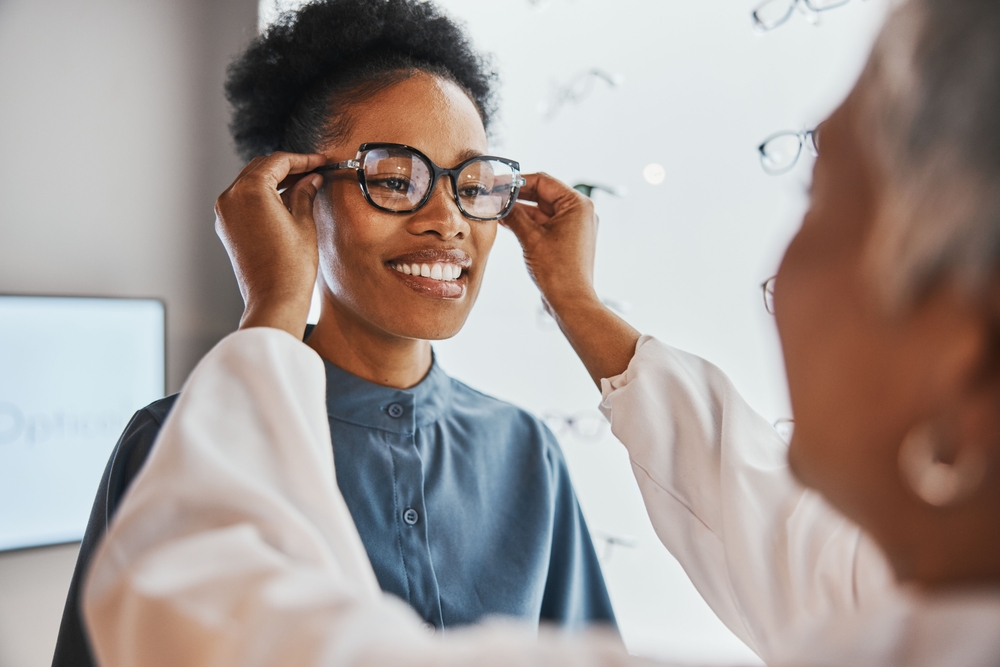
Dr. Jennifer Wu has a phrase for patients who were turned down for LASIK: “tissue is the issue.” Laser procedures remove corneal tissue, and a strong prescription or a thin cornea can leave too little to work with. Her answer for those eyes is a lens placed inside the eye, with the cornea left alone. She is an ophthalmologist and fellowship-trained cornea specialist. She founded One EyeCare LASIK so she could offer every major vision correction procedure and recommend the one your eyes call for. Dr. Wu earned her B.S. from Yale College and her M.D. from the Yale School of Medicine. She completed her ophthalmology residency at Los Angeles General Medical Center and the Doheny Eye Institute, followed by a cornea fellowship at Doheny and the University of Southern California. In 2016, she became the first surgeon in California to perform FDA-approved corneal crosslinking for keratoconus. In 2024, she became the first female surgeon in California to perform SMILE Pro. She has had laser vision correction herself, so she has been the patient too. She speaks English, Spanish, and Mandarin.
Has a strong prescription or a thin cornea ruled out LASIK?
Is EVO ICL right for you?
A no at a LASIK consultation describes your cornea. It says very little about the rest of your options, and hearing it is where this conversation starts for you. Dr. Wu weighs your prescription, your corneal thickness and shape, any dry eye, and the space inside your eye before she recommends a procedure. You can run the same checks on your own situation first.
Who is a candidate for an implantable collamer lens?
You may be a candidate if you’re nearsighted and a laser can’t safely correct your prescription. The FDA approves EVO ICL for adults ages 21 to 60 with nearsightedness between -3 and -20 diopters, including up to 4 diopters of astigmatism. Dr. Wu also has to confirm there’s enough room inside your eye for the lens. Some conditions rule the procedure out. Our consent form lists a history of herpes infection in the eye, moderate to severe glaucoma, uncontrolled diabetes, and uncontrolled autoimmune or vascular disease. Pregnancy and nursing mean waiting. Farsighted eyes need a different procedure, and we offer four others.
What does the EVO ICL process involve?
Surgery day starts with numbing drops and medication to help you relax. Dr. Wu makes a small incision at the edge of your cornea and slides in the folded lens. She then tucks it behind the colored part of your eye, in front of your natural lens. Your natural lens stays untouched, and no corneal tissue is removed. The incision usually seals by itself. You go home wearing a clear shield over the eye. Our consent form tells you to expect a scratchy feeling for about a day and light sensitivity for about 12 hours. When it suits your eyes, Dr. Wu can treat both on the same day.
Where does lens surgery fit into your treatment plan?
Your plan starts at home with a free virtual consultation. Our team reviews your eye history and goals, then books your exam. Every in-person visit happens at One EyeCare LASIK in Costa Mesa, at 3033 Bristol Street, where Dr. Wu spends a full hour with you. We take two independent sets of measurements during that visit and check them against each other. The procedure itself takes place at a surgery center, and you’ll need someone to drive you home. Dr. Wu sees you herself afterward. She placed the lens, so she is the one who examines the eye and clears you for work and exercise.
When is the right time to consider EVO ICL?
The right time comes after your prescription stops changing and before another year of fighting your contacts. Dr. Wu looks for a prescription that has stayed stable for a year. She also checks for dry eye and eyelid inflammation, and she treats both before surgery. In our practice, that preparation can take four to six weeks. “I want to do it once and do it right,” she tells patients. Age matters too. The lens corrects distance vision, and it will not stop the reading changes that arrive in your mid-40s. If readers are already part of your day, Dr. Wu may talk with you about replacing the natural lens.
Why choose a lens implant over laser vision correction?
A lens implant corrects strong nearsightedness without removing corneal tissue, and Dr. Wu reaches for it when a laser would have to remove too much. Laser procedures have real strengths. LASIK and SMILE are quick, and they never enter the inside of the eye. Dr. Wu recommends them when your cornea can support the correction. For higher prescriptions, the optics favor the lens. A 2026 network meta-analysis covering 5,141 eyes of adults with myopia found the implantable collamer lens showed lower total HOAs than other surgeries, SMILE included. HOAs, or higher-order aberrations, are the optical distortions tied to glare and blur in dim light. The trade-off is that EVO ICL is surgery inside the eye, and it brings its own risks and lifelong checkups.
Doing Nothing Means More Years in Contact Lenses
Doing nothing leaves you where you are now, dependent on glasses or contact lenses for every waking hour. Contacts carry a known medical risk. A Norwegian hospital study counted 2.52 severe eye infections a year per 10,000 wearers for extended-wear lenses used overnight. Those were infections serious enough for a hospital stay. Glasses bring a different problem, because a strong prescription means thick lenses, and losing or breaking them can leave you without usable vision until a spare turns up. The spending never ends either, because lenses, solution, exams, and backup glasses come due every year. A strong prescription also deserves regular eye exams with or without surgery, since the eye conditions linked to high myopia are found at those visits.

EVO ICL Lens Options
EVO ICL for Nearsightedness
The standard EVO ICL corrects nearsightedness alone. Dr. Wu describes it to patients as “a contact lens with no maintenance.”
It is made of Collamer, a soft lens material, and it sits out of sight behind your iris. You don’t take it out at night or clean it. Nothing about the lens changes your cornea, which matters if you were turned away from LASIK for thin or irregular corneas.
This version suits you when your glasses prescription shows little or no astigmatism. We order the lens in the size and power your measurements call for, so the lens you receive was chosen for your eye before surgery day.
What a Three-Year FDA Study Found
The case for this lens rests on published follow-up. In the U.S. FDA clinical study of 629 eyes followed for three years, the authors reported that EVO ICL lenses demonstrated accuracy and stability of refractive correction.
The same study shows the other side: a few eyes needed a lens exchanged or removed, and one involved halos and glare that began the day after surgery.
Our consent form says the same thing: halos and glare usually fade within one to three months, and they can be permanent. Dr. Wu also tracks the cells lining your inner cornea at each checkup, because those cells can decline over time.
EVO Toric ICL for Astigmatism
Astigmatism means your eye doesn’t focus light evenly, and the toric version of the lens corrects it along with your nearsightedness.
A toric lens has a set orientation. It has to sit at the angle your astigmatism runs, so the measurements before surgery carry extra weight. We ask you to stay out of contact lenses for 5 to 10 days before your measurement visit.
Here is why. A contact lens rests on the cornea and changes its shape, and that can throw off the numbers Dr. Wu uses to choose your lens power. Glasses are fine during that stretch. If your prescription shows astigmatism, this is the version Dr. Wu will discuss with you first.
What Research Says About Toric Lens Rotation
The toric lens corrects more, and it asks more of the fit. At one high-volume center in Texas, a chart review of 961 eyes reported an incredibly low exchange rate due to inappropriate sizing.
The exchanges that did happen included toric lenses that had rotated away from their intended angle.
That is the trade-off of a lens with a set orientation. If the lens turns, some of your astigmatism comes back, and the lens may need to be repositioned or swapped for a different size. Our consent form covers that possibility. It also explains that Dr. Wu does not charge a surgical fee for a repositioning or replacement, though surgery center and anesthesia fees still apply.

What happens if you do nothing?
Financial Implications of Staying in Glasses and Contacts
Staying with glasses and contacts means paying for them for the rest of your life. The bills are small and steady: lenses, solution, yearly fittings, a backup pair of glasses, prescription sunglasses.
EVO ICL is one larger expense. At our practice it runs $4,000 to $6,000 per eye. The price depends on which lens you need, standard or astigmatism.
Our team gives you your price range during the free virtual consultation, and we offer financing if you’d like to spread the cost out. Laying both paths side by side over ten or twenty years is the fair way to compare them.
What a Lifetime of Correction Adds Up To
Researchers have tried to total those small bills. A 2025 model in the American Journal of Ophthalmology followed a nearsighted child in France through life with glasses and contacts. It put the lifetime cost of myopia using a traditional approach at US$22,606 or more.
The estimate is a model of a person who starts in glasses at age 8, and European prices differ from ours.
Your own total depends on what you wear and how often you replace it. The same paper tied higher lifetime costs to heavier contact lens wear. No model can price the hours you spend on lens care, and you are the only one who knows what those hours are worth.
Health Implications of a Strong Prescription Left Unchecked
High nearsightedness is a feature of the whole eye. The eye is longer than average, and that length is linked to problems at the back of the eye and with eye pressure.
Our consent form is direct about this: patients with moderate to high myopia are naturally at higher risk of retinal detachment and earlier cataracts. Correcting your vision doesn’t remove those risks. EVO ICL won’t prevent glaucoma or cataracts, and neither will glasses.
What protects you is being examined on a schedule. Doing nothing becomes a health problem when it means skipping those exams because your current glasses still seem good enough.
What a Nationwide Study Found About Myopia and Glaucoma
The link to glaucoma shows up clearly in large datasets. In a nationwide cohort of 14.2 million adults aged 40 and older, researchers concluded that both myopia and high myopia significantly increase the risk of glaucoma developing. The risk climbed with the strength of the prescription.
The authors called for careful glaucoma screening in people with myopia.
Glaucoma damages the optic nerve slowly and without pain, so the only way to catch it early is to look for it. Dr. Wu checks your eye pressure and optic nerve at your consultation and keeps checking after surgery. A lens implant changes how you see. Your follow-up schedule stays for life.
Safety Implications of Everyday Contact Lens Habits
The safety risk with contact lenses comes from habits that creep in over years of wear. Sleeping in lenses, showering or swimming in them, stretching a two-week pair to a month, and topping off old solution all raise the odds of an eye infection.
None of these feel dangerous in the moment.
Dr. Wu hears a related story from patients who used to wear contacts comfortably and now can’t wait to take them out. If you rely on contacts and your backup glasses are years out of date, a single painful eye can leave you without clear vision for days. Work and driving both get harder during that stretch.
What the CDC Says About Lens Hygiene
The CDC puts the habit problem bluntly. According to the agency, the majority of contact lens wearers do not practice proper contact lens hygiene. Its guidance pages keep the rules short.
Keep lenses away from all water, rub and rinse them with fresh solution, never top off old solution, and don’t sleep in them unless your eye doctor says you can.
Following every rule every day for decades is hard. If you stay in contacts, follow that list and keep your yearly exam. If you’re tired of following it, that fatigue is a fair reason to ask Dr. Wu if a lens placed once could replace the routine.
FAQs
How much does EVO ICL cost?
At our practice, EVO ICL costs $4,000 to $6,000 per eye. The type of implant moves the price, and the astigmatism lens costs more than the standard lens. EVO ICL is an elective procedure, so you are responsible for the cost. Our consent form lists what that covers: the lens itself, the surgeon’s fee, the surgery center’s fee, and an anesthesia fee if one applies.
Your exact price range comes from our team during your free virtual consultation, after they review your prescription and eye history. Ask them to walk you through each line. You should know the full number before you schedule your one-hour exam with Dr. Wu, and well before you choose a surgery date.
Will I still need reading glasses after EVO ICL?
You might, depending on your age. EVO ICL corrects distance vision and leaves the natural lens inside your eye unchanged, and that lens loses its focusing flexibility with age. Our consent form says trouble reading up close commonly begins around 45, even for people who see well now.
A patient in their 20s or 30s can expect years of clear vision at every distance before readers enter the picture. A patient in their late 40s should plan on readers for small print soon after surgery. Tell Dr. Wu how you use your eyes during the day. If reading without glasses is your main goal, she’ll explain which of our procedures addresses the aging lens directly.
Can the lens be removed later?
Yes. The lens is added to your eye, and nothing is taken away to make room for it, so Dr. Wu can remove or exchange it if your needs change.
Two situations come up. The first is fit. If the lens sits too close to your natural lens or too far from it, Dr. Wu can exchange it for a different size. She can also remove it if checkups show the cells of your inner cornea declining faster than expected.
The second is age. Everyone develops cataracts eventually, and our consent form explains that the implant is removed during cataract surgery along with the cloudy natural lens. A new lens implant then takes over the focusing job.
Does dry eye rule out EVO ICL?
No, and for some patients it is the reason Dr. Wu suggests a lens. LASIK can make dryness worse, which is one of the five reasons she turns patients away from it. EVO ICL leaves the corneal surface alone. Dryness still matters, though. A dry surface blurs your vision and can distort the measurements we use to choose your lens, so Dr. Wu examines your tear film and eyelids at your consultation.
If she finds dry eye or eyelid inflammation, we treat it first and recheck. Expect that step to add several weeks to your timeline. Dr. Wu keeps watching the surface of your eyes after surgery as well.
How do I get started?
Call us at 949.606.0523 or request a consultation online. Your first step is a free virtual visit with our team, and it takes place before you drive anywhere. They’ll ask about your prescription, your history with glasses and contacts, any earlier eye surgery, and what you want to see without help.
Have your current glasses prescription nearby if you can find it. If EVO ICL looks like a reasonable fit, our team books your one-hour exam with Dr. Wu. Bring your glasses and a list of your medications. You don’t have to arrive knowing which procedure you want. Sorting that out with you is the job Dr. Wu does at that visit.