Yes, you might, and Demodex blepharitis is far more common than most people realize. If you’ve been dealing with persistent eyelid itching, crusty lashes every morning, or dry eye symptoms that won’t respond to treatment, the culprit could be Demodex blepharitis. This condition affects an estimated 25 million Americans and accounts for more than two-thirds of all blepharitis cases in the United States.
The good news: a 2023 FDA approval changed the treatment landscape entirely, offering a targeted option for people who have struggled for years without real relief.
The 5 Things That Separate Eyelid Mites From Every Other Eye Condition
- Demodex blepharitis is identified by waxy, cylindrical debris called collarettes at the base of your eyelashes.
- Nighttime and early-morning itching is the most distinctive symptom; it differs from allergy-related eye irritation.
- Age is the single biggest risk factor, with mite prevalence reaching near-universal levels in adults over 70.
- Standard dry eye treatments fail because mites physically block the oil glands in your eyelids.
- The FDA-approved treatment lotilaner (Xdemvy) targets mites directly, with strong eradication rates in clinical trials.
Wait, tiny bugs actually live on your eyelashes?
Here’s something most people don’t know: everyone has Demodex mites. These microscopic eight-legged parasites naturally live on human skin, including the eyelids. A small, stable population is completely normal and doesn’t cause any harm.
The problem starts when their numbers grow beyond what your immune system can keep in check. That overgrowth triggers inflammation, blocks the glands in your eyelids, and leads to the chronic symptoms that bring patients into the eye doctor’s office after months, and sometimes years, of frustration.
Meet Demodex: Your Eyelid’s Uninvited Residents
Two species affect the eyes. Demodex folliculorum lives in the eyelash follicles, while Demodex brevis burrows deeper into the meibomian glands that produce the oily layer of your tears. Both feed on dead skin cells and natural oils, leaving behind waste products that irritate the surrounding tissue.
Their lifecycle runs about 14 to 18 days. Mites are most active at night, emerging to mate and lay eggs, which is why symptoms tend to peak in the evening and upon waking, according to research on Demodex blepharitis.
The Tell-Tale Clue Doctors Look For: Collarettes
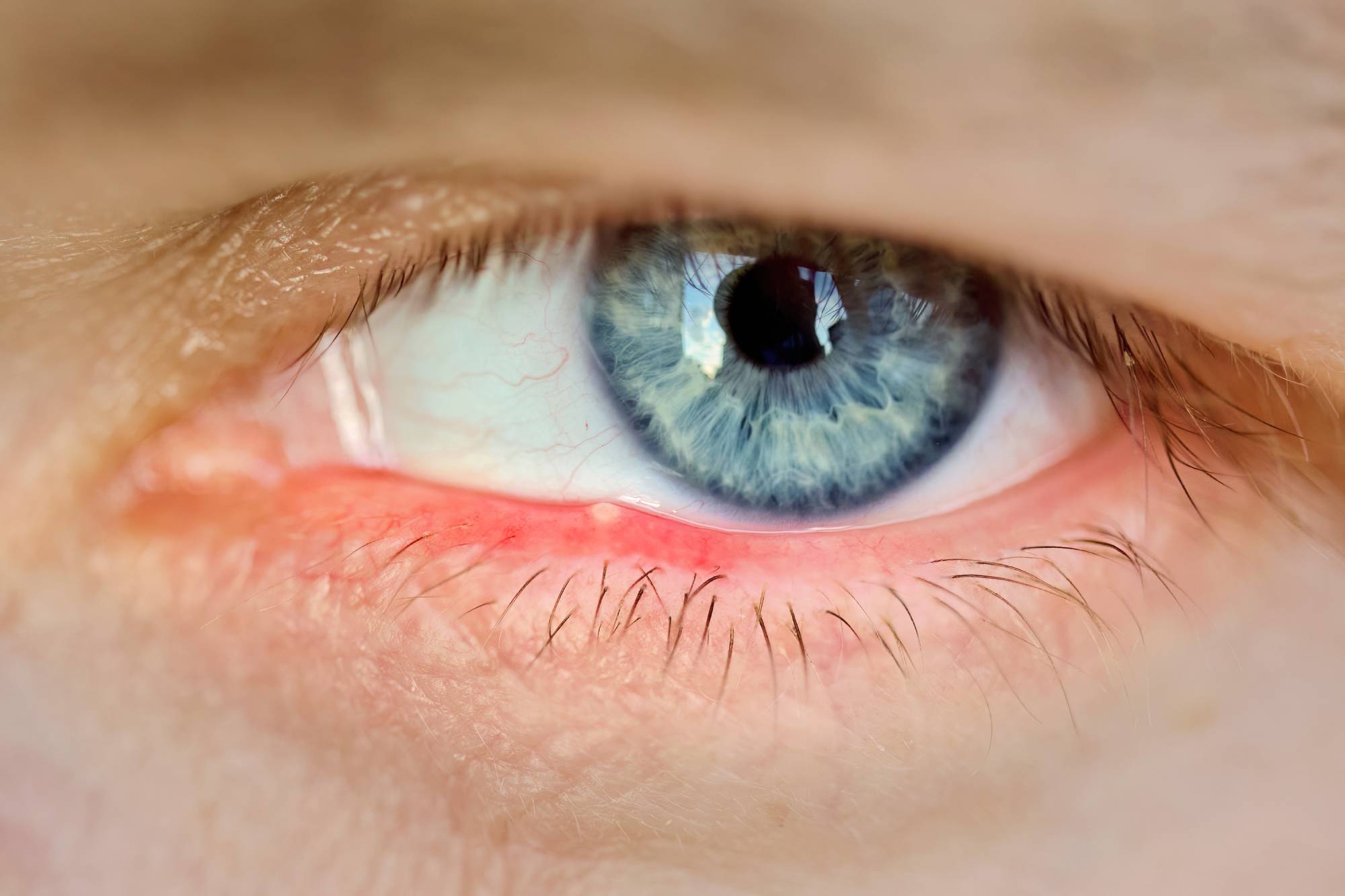
The clearest sign of Demodex blepharitis is called a collarette. These are tiny, waxy, cylindrical deposits that wrap around the base of eyelashes. Picture a small sleeve or collar stuck to each lash.
Collarettes are composed of mite waste and egg casings. Healthcare providers consider them a definitive medical sign of Demodex blepharitis, identifiable during a routine slit-lamp exam. Here’s what they look like:
- White or yellowish cylindrical debris
- Located at the base of the eyelashes, not along the lid margin
- Present on both upper and lower lids
- Visible without needing to remove any lashes
Could your age be the reason you have eyelid mites?
Age is the most significant risk factor for Demodex overgrowth. Research published on PubMed shows mite prevalence climbs steadily with age, approaching near-universal rates in adults over 70. It’s not just a coincidence; biology explains it clearly.
Why Getting Older Makes You More Vulnerable
As the immune system naturally weakens over time, it becomes less effective at controlling mite populations. Younger immune systems keep mite numbers in check without any effort. That balance shifts with age.
Skin composition also changes as people get older. Oil gland output and sebum type shift in ways that create more favorable conditions for mite reproduction. These two factors together (immune decline and skin changes) make older adults significantly more susceptible.
Other Health Conditions That Raise Your Risk
Age isn’t the only factor. Certain medical conditions and circumstances can increase your vulnerability, regardless of how old you are:
- Rosacea: People with rosacea consistently show higher Demodex populations
- Diabetes: Changes in immune function linked to blood sugar level dysregulation can allow mites to thrive
- Immunosuppressive medications: Drugs that reduce immune activity lower the body’s ability to regulate mite numbers
- Hormonal changes: Shifts during menopause can alter skin conditions that influence mite growth
- Poor eyelid hygiene: Debris buildup around the lashes creates an environment where mites feed and multiply
People with compromised immune systems, whether from chemotherapy, organ transplantation, or autoimmune treatment, face an elevated risk, as outlined in this review on Demodex and immune status. Discussing eye health with a healthcare professional is strongly advised.
Is that itch at 2 AM trying to tell you something?
That distinctive nighttime itch is one of the clearest signals of Demodex blepharitis. While many eye conditions cause itching, the timing here is specific; symptoms intensify in the evening and peak first thing in the morning, when mite activity is at its highest.
Why Your Symptoms Follow a Nightly Pattern
The pattern traces directly back to mite behavior. During the day, mites stay sheltered inside follicles. At night, they emerge to reproduce, and their movement is irritating. Many people describe it as a crawling or burning sensation, distinctly different from the histamine-driven itch of an allergic reaction.
This difference in symptom quality matters. If antihistamines haven’t helped, it’s a sign the immune system isn’t responding to pollen or allergens. It may be responding to mites.
The Full Symptom Checklist
Healthcare professionals use the following symptoms when evaluating for Demodex blepharitis. If several of these apply, professional evaluation is worth pursuing, as detailed in this clinical review on Demodex blepharitis:
- Nighttime and morning eyelid itching that worsens after waking
- Waxy collarettes at eyelash bases are visible as cylindrical debris
- Persistent eyelid redness that doesn’t clear with standard care
- Chronic dry eye symptoms, including burning or a gritty foreign body sensation
- Morning crusting around the lashes that returns daily despite cleaning
- Eyelash irregularities, such as lashes that fall out easily or grow in the wrong direction
- Recurrent styes or chalazion that keep coming back without explanation
Symptoms often worsen during periods of stress or illness, when the immune system is temporarily less effective at managing mite activity.
Here’s the Real Reason Your Eye Drops Aren’t Working
If artificial tears bring temporary relief but symptoms always return, mites may be the underlying cause. Standard dry eye treatments address symptoms, not the root cause, which is why so many patients cycle through treatments without lasting improvement.
How Mites Block Your Eye’s Natural Oil Factory
The meibomian glands produce the oily layer that keeps your tear film from evaporating too quickly. Demodex brevis physically blocks the openings of these glands, disrupting oil production.
Think of it this way: eye drops are like mopping up a wet floor while the pipe is still leaking. Until the blockage is cleared, the problem keeps coming back.
Why Doctors Often Miss the Diagnosis
Demodex blepharitis shares symptoms with bacterial infections, allergic reactions, and standard dry eye syndrome. Without specifically looking for collarettes, healthcare providers can reasonably misdiagnose it as one of these more common conditions.
Antibiotics won’t eliminate mites. Antihistamines don’t address mite-driven inflammation. As noted in this study on Demodex and the ocular surface, patients sometimes spend years cycling through ineffective treatments because the symptom overlap is genuinely difficult to parse without the right diagnostic tools.
FDA Just Approved the First Real Cure. Here’s What It Does
For the first time, there is a treatment specifically designed to target and eliminate Demodex mites. That’s a significant shift for patients who have tried everything else.
How Lotilaner (Xdemvy) Works
In 2023, the FDA approved lotilaner ophthalmic solution 0.25%, sold under the brand name Xdemvy. It works by targeting the mites’ nervous system, disrupting their function without harming human cells. Clinical trial data showed strong mite eradication rates after six weeks of twice-daily application.
Most patients begin noticing improvement within two to four weeks, with maximum benefit reached by the six-week mark. The application goes directly to the eyelid margins, making it a straightforward addition to a daily routine.
What Makes It Better Than Old Remedies
Tea tree oil has been used as a home remedy for mites. Still, research published in BMC Ophthalmology shows inconsistent results and potential toxicity to the meibomian gland tissue it’s meant to help. Xdemvy was purpose-built to avoid that problem.
Here’s what sets the FDA-approved treatment apart:
- Targets mites specifically, without damaging surrounding tissue
- Minimal side effects compared to abrasive scrubbing routines
- Faster, more measurable results than traditional approaches
- Simple twice-daily application that fits into existing routines
For patients who have been struggling for months or years, having a targeted option backed by clinical data is a meaningful development.
When should you stop self-treating and see a specialist?
Self-care has limits. Knowing when to escalate to professional medical care can save months of unnecessary discomfort.
Warning Signs That Need a Doctor’s Eye
Seek professional evaluation if any of the following apply:
- You’ve tried multiple treatments without sustained improvement
- You’re experiencing vision changes alongside eyelid symptoms
- Inflammation is severe, painful, or spreading
What Happens at a Complex Dry Eye Consultation
A complex dry eye consultation goes beyond symptom management. Specialists use detailed slit-lamp examination and meibomian gland imaging to look for structural causes (including Demodex blepharitis) rather than just responding to what’s on the surface.
The evaluation typically screens for multiple contributing factors: mite overgrowth, ocular rosacea, autoimmune conditions, and environmental medical risk factors.
Don’t Let Eyelid Mites Steal Another Year of Comfort From You
Demodex blepharitis is underdiagnosed, but it’s identifiable and treatable. The combination of nighttime itching and visible collarettes at the base of the eyelashes is a strong signal worth taking seriously.
If your dry eye, blepharitis, or eyelid irritation hasn’t responded to standard treatments, consider the possibility of Demodex mites as the underlying cause. Specialized Demodex blepharitis evaluation can identify this treatable condition and provide targeted therapy for lasting relief. Book a Demodex blepharitis evaluation at One Eyecare Lasik and get the targeted treatment your eyes actually need.
FAQs
How much does treatment for eyelid mites typically cost?
Treatment costs vary depending on your insurance plan and location. The FDA-approved lotilaner solution (Xdemvy) may be covered when there’s a confirmed diagnosis of Demodex blepharitis, so it’s worth calling your insurer ahead of time to check coverage. Out-of-pocket costs differ widely, so asking your eye care provider about options during your visit is a practical first step.
Can eyelid mites spread to other people?
Everyone naturally carries some Demodex mites, so “spreading” them doesn’t quite work the way it does with a contagious infection. Close face-to-face contact can transfer mites, but whether someone develops an overgrowth depends much more on their own immune system and medical risk factors than on simple exposure.
How long does it take to see results from treatment?
Most people notice improvement within two to four weeks of starting Xdemvy, with the best results typically seen around the six-week mark. Individual timelines vary depending on the size of the mite population and whether other conditions are present.
Are there natural remedies that work against eyelid mites?
Tea tree oil has some evidence supporting it, but studies show it yields inconsistent results and can irritate or damage the meibomian glands with regular use. The FDA-approved option offers a safer, more reliable route to mite elimination. If you’re considering seeking medical care, that’s worth discussing with a healthcare professional.
Citations/sources:
- https://pmc.ncbi.nlm.nih.gov/articles/PMC2946818/
- https://pmc.ncbi.nlm.nih.gov/articles/PMC11368203/
- https://pmc.ncbi.nlm.nih.gov/articles/PMC6118860/
- https://pmc.ncbi.nlm.nih.gov/articles/PMC10539367/
- https://pmc.ncbi.nlm.nih.gov/articles/PMC8246181/
- https://pmc.ncbi.nlm.nih.gov/articles/PMC10351901/